

Estimated reading time: 4 minutes
You cannot become what you cannot see. It is a phrase so widely repeated that it risks losing its force. But the evidence behind it is both clear and urgent.
Wunmi Mosaku, a BAFTA award-winning British-Nigerian actress and one of the most compelling voices in contemporary British film and television, has spoken with quiet precision about what representation actually does. It does not simply inspire. It signals belonging. And belonging is the precondition for leadership.
For girls from under-represented backgrounds considering careers in business, tech, law, science, or the creative industries, the absence of people who look like them in those spaces sends a message. BelEve’s work and the Give to Gain principle, at their core, are built on the understanding that changing that message requires structural intervention, not aspiration alone.
The Architecture of Belonging
“Representation is important because it tells people they belong.” – Wunmi Mosaku
Wunmi’s statement is precise because it identifies what representation actually produces: a sense of legitimacy. The message that the space was built with you in mind. That your presence here is not an exception; it is the norm.
For young women, particularly those from Black and minority ethnic backgrounds, this signal matters at every stage of the career journey from the moment they first consider a profession to the point where they decide whether to stay or leave an organisation.
The research makes this structural argument compelling:
Girls are 82% more confident in career choices after exposure to role models who reflect their identity (OECD Youth Studies, 2023)
Career aspiration clarity increases by up to 35% through structured mentorship and representation (BelEve Impact Data, 2024).
19% higher innovation revenue in gender-diverse leadership teams (Boston Consulting Group, 2023).
What Structural Visibility Looks Like
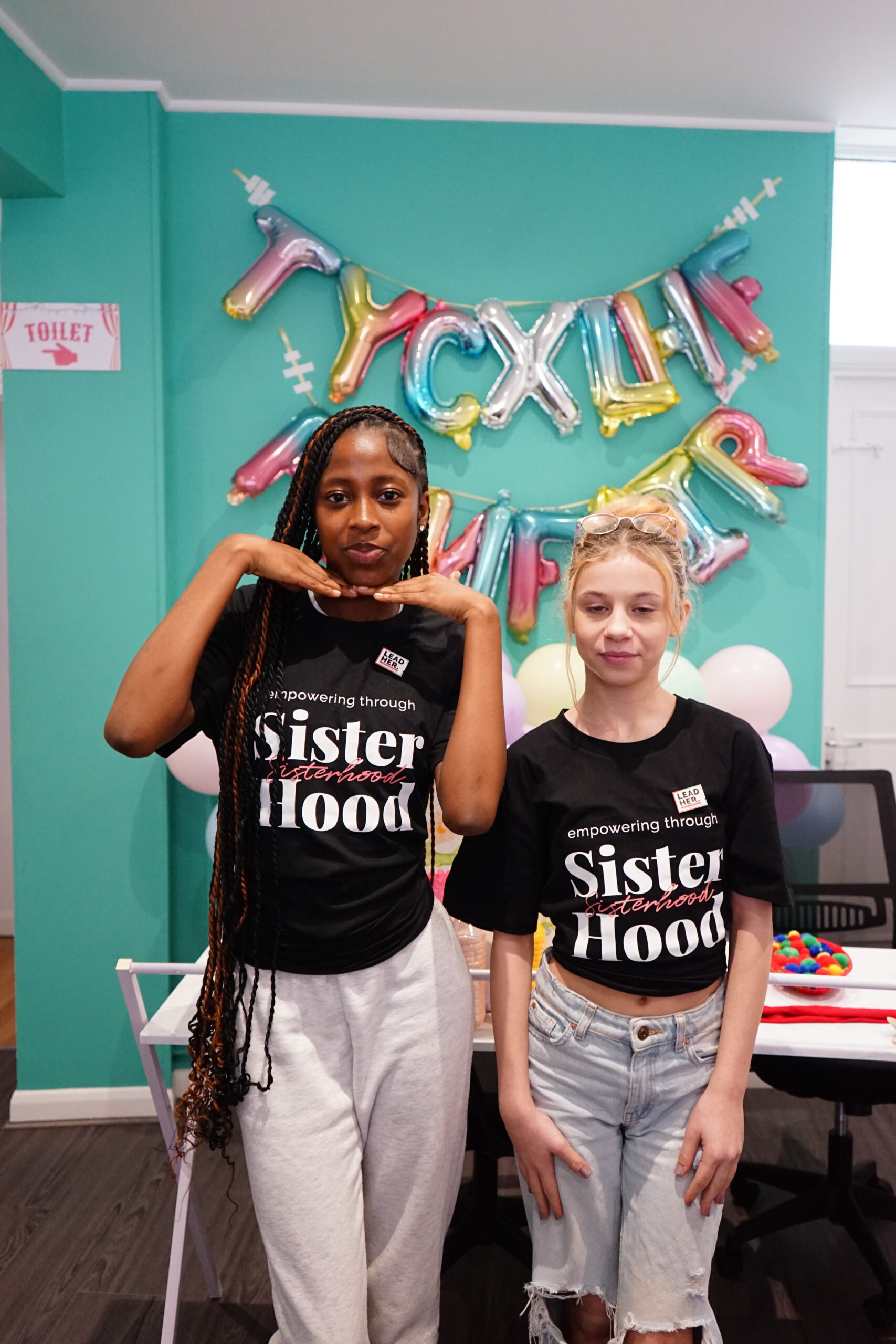
BelEve’s approach to representation goes beyond placing diverse faces in brochures. Through corporate shadowing placements, industry exposure events, and carefully matched mentoring relationships, BelEve creates the conditions where girls do not just hear that they belong in high-growth sectors; they experience it.
Seeing a Black British woman leading a finance team at a JP Morgan event. Being mentored by an international gender specialist. Meeting a lawyer at Simmons & Simmons who looks like you, came from a similar background, and is willing to share the map. These are not symbolic gestures. They are structural interventions with measurable outcomes.
The Corporate Imperative
For organisations navigating DEI commitments in 2026, the case for structural representation is not primarily ethical, though it is that too. It is economic.
Companies in the top quartile for gender diversity are 39% more likely to financially outperform (McKinsey, Diversity Matters Even More, 2023).
Diverse teams make better decisions 87% of the time (Cloverpop Research, 2022).
76% of job seekers consider a diverse workforce essential when evaluating employers (Gartner, 2024).
The talent, the innovation, and the performance advantages of genuine representation are well-documented. What BelEve provides is the structural pipeline that makes those advantages sustainable by investing in diverse talent at the point where it is most at risk of being lost.
Conclusion
Wunmi Mosaku stepped into spaces that were not built for her and rebuilt them from the inside. She gave the screen complex, fully realised Black British women. Not as background. Not as an exception. As the entire story.
She Gave, The World Gained
Girls gained permission to see themselves in powerful roles. The creative industry gained proof that representation is not a risk; it is a magnet for the talent and audiences it has been missing. British culture gained a richer, truer version of itself.
That is what structural representation does. It does not just show girls a path. It makes the path wider for every girl who comes next.
Visibility without structure is inspiration. Visibility with structure is a transformation. When organisations give girls visibility through mentorship, corporate access, and the deliberate act of being present, they gain the innovators and leaders their industry urgently needs.
She gave representation. Girls gained belief. Give visibility. Gain the future.
► Give Opportunity. Gain Future Leaders.
Become a partner to offer internships, mentorship, and real-world exposure to young women.



0 Comments